Player Controller (BP_AVE_PC)

The BP_AVE_PC manages the active Pawn and makes sure the game starts correctly.
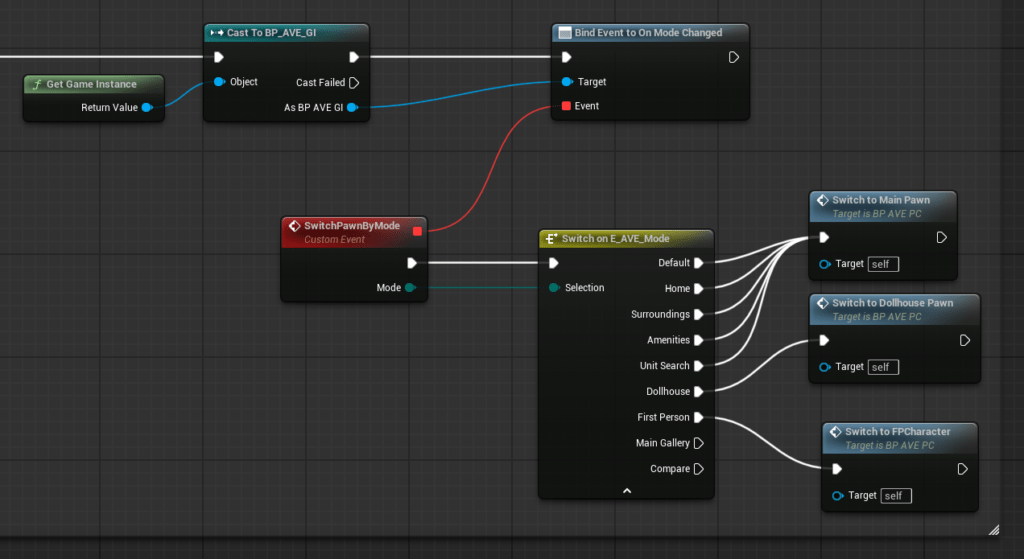
It also acts as the execution layer, where it “listens” for mode changes from the Game Instance. When the Game Instance dictates a mode switch, the Player Controller executes the logic to swap the Pawn.

Role & Responsibilities

The Player Controller focuses on orchestration rather than direct input logic. Its primary duties include:

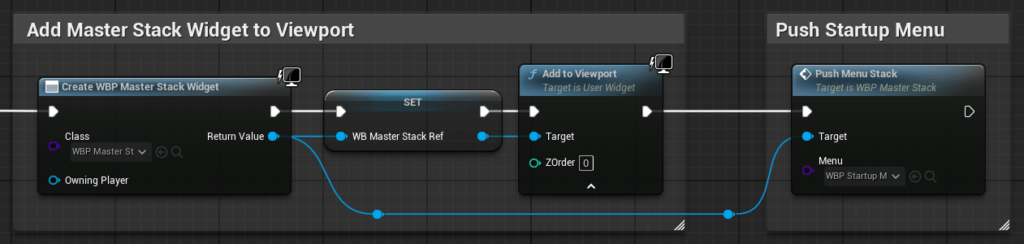
  • UI Initialization: Creates and adds the ‘WBP_Master_Stack‘ to the viewport immediately upon BeginPlay.
  • Pawn Management: Handles the spawning and possessing of specific Pawns (e.g., Explorer vs. Dollhouse) based on mode changes received from BP_AVE_GI.
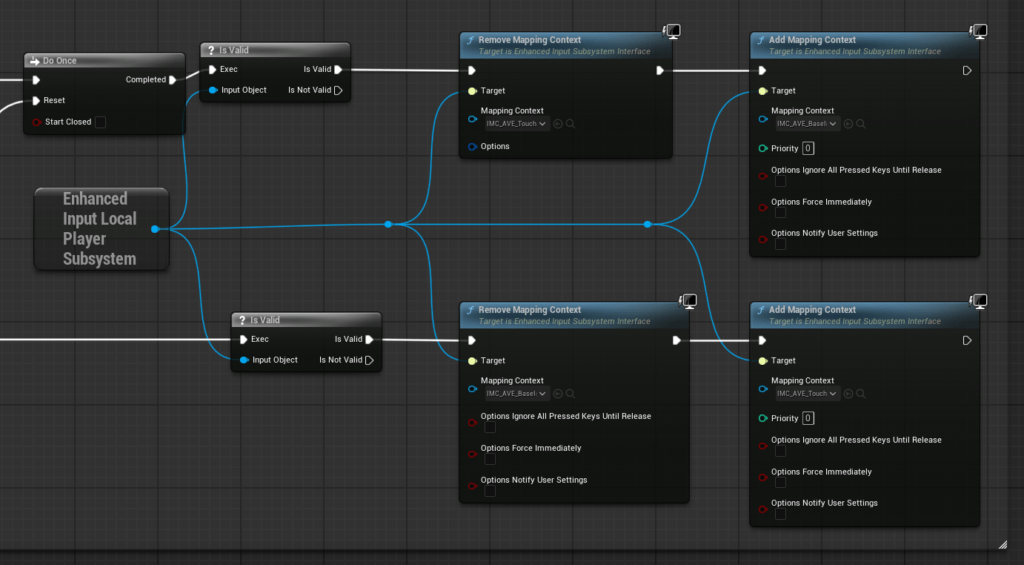
  • Input Method: Dynamically adapts the controls based on the user’s active device (Mouse & Keyboard vs. Touchscreen).
  • Cinematics: Triggers the introductory video sequence and background audio tracks.

To maintain a clean architecture, BP_AVE_PC is strictly scoped:

  • Does NOT manage global modes or filters; that is handled by the Game Instance BP_AVE_GI.
  • Does NOT store persistent data like save files or settings (Handled by BP_AVE_GI).
  • Does NOT interpret movement input (Handled by the individual Pawn classes).

Implementation Examples

The following graphs show the logic inside BP_AVE_PC. These examples demonstrate how the controller responds to state changes from the Game Instance, dynamically swaps Input Mapping Contexts for touch support, and initializes the user interface.

related documentation

Configuring Project Settings

Configuring Project Settings To ensure AVE II functions correctly, you must verify specific project settings. These configurations establish the communication backbone between the UI and your Blueprint logic. Note: The BP_AVE_GI class is essential for handling global communication and persistent data between the UI and gameplay elements.

Read more >

Getting Started

Welcome to AVE II, a real‑estate visualization experience built in Unreal Engine 5. This guide helps you quickly understand the core systems, navigation, and workflow so you can begin integrating AVE II into your project or exploring its features. Overview AVE II provides an intuitive, high‑quality exploration system designed for

Read more >

POI Basics & Custom Tags

Get started with interactive navigation in AVE II. This beginner-friendly guide covers the essentials of placing BP_POI_Generic actors, customizing info panels with text and images, and organizing your locations into simple categories using tags.

Read more >

Framework

This section explains the core structure of AVE II. It covers which systems manage data, how responsibilities are split up, and how different parts of the project communicate with each other. These pages are designed to help you understand where to modify or add Blueprint logic. They explain which classes

Read more >

Game Instance (BP_AVE_GI)

The Game Instance (BP_AVE_GI) acts as the central mediator in AVE II. It owns a persistent runtime state, coordinates communication between systems, and ensures that gameplay logic, UI, and data remain decoupled. Roles and Responsibilities The BP_AVE_GI manages high-level orchestration across the framework. Its primary duties include: Implementation Examples The

Read more >